THE MOTHER WOUND - PART ONE: Breaking The Silence Around Unspoken Pain
Originally written March 15, 2023 | Updated for this series which follows my journey through grief and loss and recovery.
Before I begin, I want to be clear: this is a no blame piece. We are all products of our past, and the mother wound is something I speak about with compassion, acceptance, and truth.
I know it can be a triggering topic, comments and face book posts telling you that you ‘should’ love your mother as you only have one – and then there are the occasions such as birthdays and Mother’s Day when conversations, adverts, and even greetings cards can stir up mixed emotions. For many, these days are full of love and celebration. But for others, it brings up pain, confusion, or grief.
This is for those who feel the weight of that wound but may not recognise the personal impact its having and if they do, they often remain silent about it.
What is the Mother Wound?
The “mother wound” refers to the pain, patterns, and unconscious beliefs that are passed down through the mother – child relationship. At its core, it’s the gap between what we needed from our mothers and what we actually received.
In families shaped by patriarchal and matriarchal patterns, mothers can carry the weight of societal expectations, and we often feel the impact of that too. We learn to navigate feelings, moods, and unspoken rules, often at the expense of our own needs. We protect, please, and shrink to fit the space we’re given, taking on responsibilities, we didn’t ask for. These patterns teach us how to survive in the family, but they can leave lasting echoes – shaping how we see ourselves, how we relate to others, and how safe we feel showing up as our true selves.
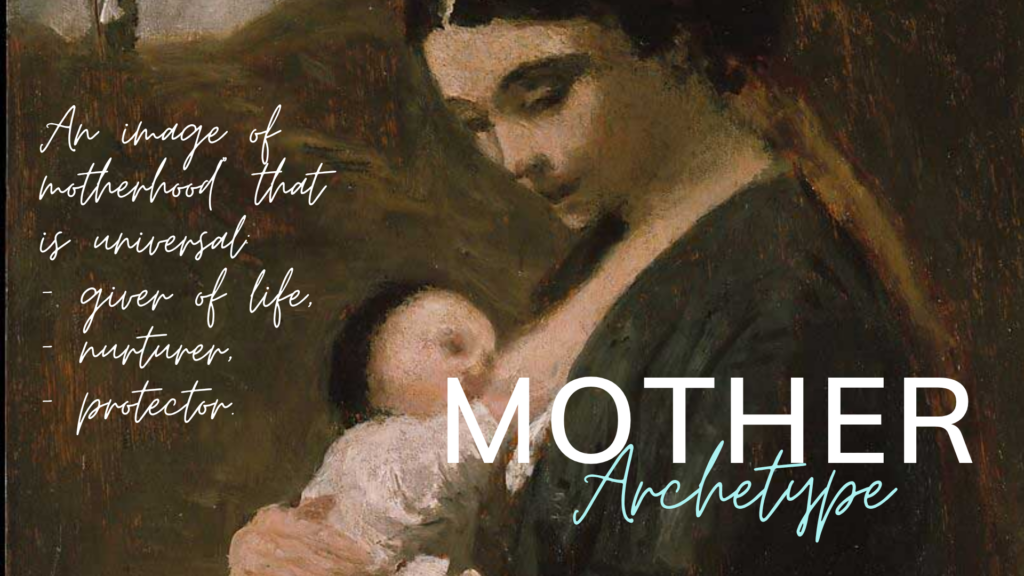
Carl Jung identified the archetype of the mother as all-loving, selfless, and endlessly nurturing is idealised in society- think Mary Poppins on steroids!
Whilst beautiful in theory, this image leaves no room for the reality that mothers are human. They carry both light and shadow, hopes and regrets, strengths and struggles from their past. As a mother myself – I am painfully aware of the impact my life has had and continues to have on my children, and how hard it can be carrying that responsibility.
When mothers suppress their own pain or shame, it often leaks into their relationship with their children. Add to that the heavy social expectation for mothers to be “perfect,” and we begin to see how impossible the role becomes.
The unspoken loyalty of children-protecting their mothers’ emotions, often at the cost of their own – then keeps these cycles alive across generations.
The Mother architype presents the mother as loving and kind and nurturing a woman that takes care of her family above everything else, like Mary Poppins on steroids!
As lovely as that is, this idolisation does not do mothers any favours as it does not consider the shadow or darker side of the mother architype.
Because of this, the pressure for mothers to be perfect in the eyes of society is huge and this causes many mothers to be overly self-critical and feel huge levels of guilt for even thinking about themselves!
But the reality is mothers are human beings too, with both light and dark aspects living in us. Unfortunately society prefers the darker side to be hidden. When mothers suppressed this side of them it has to go somewhere and it tends to leak out into the relationships they have with their children causing them internal shame and self judgment.
In addition to this the unspoken loyalty children have towards their mother no keeps the shame alive. It is this dynamic that becomes a wound, and gets passed on through lived experience.

How do we know we are wounded?
The mother wound doesn’t look the same for everyone, but many people I’ve worked with (and my own journey, too) share these patterns. The pattens are directly linked to the behavioural adaptations we made to survive in our families and what we came to believe was true which we unconsciously carry with us into adulthood:
- People pleasing – you may believe: “If I meet everyone’s needs, maybe I’ll be loved.”
- Dening own emotions and dreams and needs – you may believe: “My feelings aren’t safe or welcome.”
- Not ever feeling enough – you may believe: “I have to be perfect to be accepted.”
- Being everything for everyone and keeping people close – you might believe: “If I’m not what they want, they’ll leave.”
- Feeling responsible for everyone – you might believe: “It’s my job to hold everything together.”
“There is a direct relationship between our childlike desire to save our mothers from their pain and our fear of powerfully claiming our own lives”.
I’m Not Enough
What it might look like in our relationship with our mother?
Our relationship with our mother may feel very tangled and on a deep level we grow up believing it’s our role to keep her happy, becoming the caretaker of her emotions while silencing our own needs. This often leaves us feeling “never enough,” constantly striving to prove our worth or avoid her disappointment. To stay safe and loved, we might shrink so as not to outshine her and feel guilty or selfish whenever we try to put ourselves first. Over time, this creates a deep inner conflict between love, loyalty, and the right to be our full, authentic selves causing a deep and unexplainable numbness.
For me, the wound showed up as invisibility as self-sabotage. I buried my creativity, dreams and needs and shifted boundaries to avoid conflict to keep the peace, at the expense of my own truth.
Eventually, when I chose authenticity and moral fairness (I chose to leave an abusive marriage) the “boat rocked” – and I was thrown overboard and cut off from any family support virtually overnight.
My whole life had been spent giving and supporting and I had no idea what I had done wrong and still don’t to this day, but the ache was deep – the pain was raw and strangely it was also the moment my healing truly began.
At 34 I found myself free to be myself for the first time ever – even though I wasn’t aware of that at that time.
I had no idea this was a truth, I felt the pain of it but had no understanding of the collective pattens women , including me were experiencing until I came across the work by Bethany Webster
The beliefs we form are influenced not only by our life experiences – but down passed through generations via epigenetics and core beliefs and mostly sit in our unconscious minds until we start to make them conscious.
The egg we developed from was growing in our mothers when they were still an embryo and so this begins way before we are even born. (totally mind blowing!)
The only way to stop this happening is through generational and intergenerational healing. In short – stopping the cycle.
The concept of the mother wound is something I came across as I searched for understanding about my own situation and reading about it helped me process the confusion, big emotions and fear I was feeling around my relationship with my own mother. It’s so hard to acknowledge that your mother was not able to give you the mothering you needed. There’s no way back, you can’t re wind and start again and the grief attached to that is deep and painful.
Why This Work Matters
The mother wound is not just about individual pain. It’s about cycles -deeply ingrained, often unconscious patterns passed down through families, culture, and society. These patterns live in our core beliefs, in our nervous systems, and even in our DNA through epigenetics.
Healing isn’t about blaming our mothers.
- It’s about recognising what is happening, what is missing and grieving what we never had.
- Its about learning how to be ourselves and give ourselves what we need right now.
- It’s about breaking the cycle, so our children (and their children) don’t inherit the same pain.
“If we avoid acknowledging the full impact of our mother’s pain on our lives, we still remain to some degree children”.
For now, I want to leave you with this:
It is possible to heal. It is possible to reclaim your wholeness, and to live from a place of love and authenticity rather than inherited pain.
Whether your relationship with your mother was painful, complicated, or even beautiful – this work matters.
This is just Part One in this series on the mother wound. Here, we’ve explored what it is, where it comes from, and some of the ways it can shape our lives.
In Part Two, I’ll share more about the signs and symptoms -how you can spot the mother wound showing up in your life and relationships, sometimes in subtle and unexpected ways.
So, for all those women breaking the cycles
– I applaud you (I know how hard this is!)
For those whose relationships with their mothers are healthy
– appreciate them, they are rarer that you think!
For those who recognise these patterns in your relationship and want to break the cycle
Follow this series, check out the worksheets and find out how!
Want to know more?
Get in touch